Refer a Patient
We’ll get your patient set up with a virtual advocate intake visit, and we'll keep you updated along the way.

Contact us
Dr. John Taylor, CMO at Solace
See what happens when an advocate’s in your corner.




How Referrals Work
It's easy to connect your patients with a Solace advocate. What happens next?

Refer Your Patient
Submit a referral through our website and let a Solace advocate take on the complex tasks that overwhelm your patients.

We'll Find the Right Advocate
During the intake visit, we'll match your patient with a trained Solace advocate. Advocates don't replace the existing care team—so we'll work with you, too.
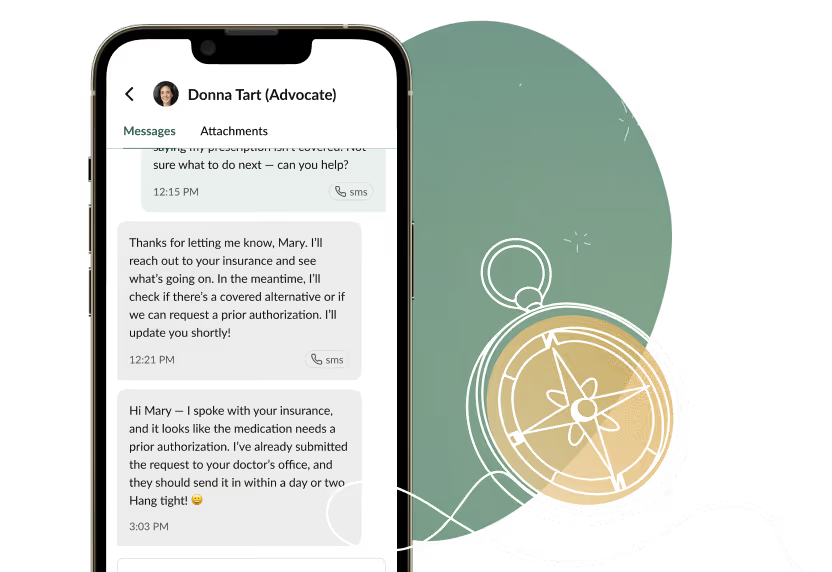
Dedicated, Ongoing Care
An advocate works directly with your patient to coordinate care and navigate the barriers that disrupt their treatment.
Trusted by Doctors
"Solace has made such a difference in the lives of my patients. I’ve gotten to see it firsthand, especially with older patients. Patients are more confident, treated with dignity, and experience better results after working with an advocate."

Dr. Luke Nelligan, Family Medicine, Marian University
.avif)

A support network for you & your patient
Advocates at Solace can help patients dealing with...

Cancer
Alzheimers
Dementia
COPD
Chronic Pain
Parkinsons
Multiple Sclerosis
Kidney Disease


An Advocate Can Help...

Schedule doctor’s appointments
Coordinate referrals
Secure approvals & manage appeals
Organize medical records
Handle the calls & paperwork

Advocates Cannot...

Make a diagnosis
Prescribe medications
Offer medical advice
FAQs
Refer a Patient

Advocates help patients follow through on care plans by coordinating appointments, securing prior authorizations, organizing documentation, handling insurance communication, and more. This reduces treatment delays, strengthens continuity of care, and eases the administrative strain on your clinical staff.
Solace advocates are registered nurses and other experienced healthcare professionals who bring an average of 16 years of experience across a wide range of care settings, including hospitals, specialty clinics, and home care. They work longitudinally with your patient to build a unique relationship and strengthen your patient's understanding of their healthcare.
No. Solace advocates and physicians do not diagnose, prescribe, or modify clinical plans. The referring clinician remains responsible for medical decision-making while the advocates focus on care coordination, scheduling, securing prior authorizations, and more.
You remain the treating clinician and do what you do best! We'll support your care plan by assisting with care coordination and logistical tasks on the patient’s behalf. Our goal is to support your patient and your care plan without adding work to your staff.
During intake, we’ll learn about your patient’s care goals and match them with an experienced advocate who can help. The advocate will create a plan for the patient and get to work immediately.
Solace advocates are U.S. based in all 50 states, but an advocate doesn’t need to live locally to help a patient get great healthcare. They’ll work closely with the patient and their providers to ensure the best possible outcomes.
Depending on your plan, you may have a copay. We verify coverage and keep patients informed as their benefits are processed, and our financial assistance program is designed for patients who may struggle with copays.
Solace relationships are built through communication, however it works best for the patients. The advocate is just a text or phone call away. Our patient platform makes it easy for people to schedule time with their advocate, view notes, loop in family members, and more—all from the comfort of their living room.
We have a no-homework ethos. This means that an advocate won't just tell your patient the right steps to take or the phone number to call—they'll do the work and make the calls to make sure even the most complex patients get the care they need.